
An infrastructure architect had already produced the apparent answer: a seven-slide, $8.5M single-year proposal. What it did not contain was the business case underneath the number. There was no defensible requirements set, no current-to-future-state view, no TCO model, and no way to show why that spend, in that sequence, was the right answer.
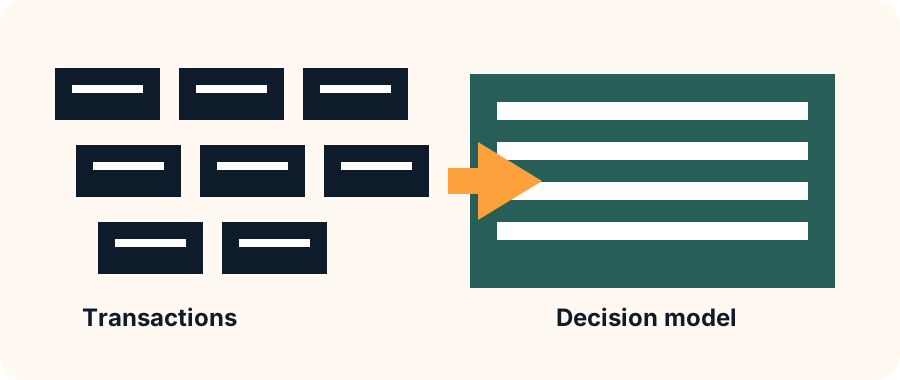
The same problem appeared in the annual budget. Assets, depreciation, licenses, support, lifecycle, recovery needs, and capacity requests lived in different sources. Leadership could see transactions, but not the operating choices behind them. Technical teams could ask for capacity without seeing what production resources cost, and the same spend questions were reopened each cycle because no shared decision model existed.
The work restarted at the baseline. Datacenter inventory was rebuilt, business stakeholders were asked what the future state actually had to support, technical requirements were tied to recovery and resilience needs, and current-to-future-state options were modeled over time. The capital request became a 36 to 48 month roadmap and a three-year TCO view instead of a one-year buy list.
The roadmap received CFO endorsement, redirected approved 2023 spend, anchored 2024 and 2025 budget planning, and was later extended by Architecture across Infrastructure, End-user Technologies, Information Security, and Application Development. The three-year model projected about $3M less spend than the prior trajectory. That is a projected-plan comparison, not a claim of realized savings or full roadmap implementation.
The important change was not better budget formatting. Leaders could finally see the requirements, sequence, dependencies, operating cost, and tradeoffs behind the money before approving it.