
The company had a working sales engine. Contracts were multi-year with annual value, and invoicing did not begin until go-live. But implementations waited roughly a year before kickoff and then took another four to eight months to reach go-live. Sales kept closing, so every new contract entered a queue that was already getting longer.
The problem was not demand and it was not collections. The company had sold the work. It could not convert signed contracts into go-lives fast enough to begin invoicing. Project tracking showed long gaps between ready and started work. Implementation and support competed for the same scarce people. Stabilization after go-live lingered, and teams accepted new starts before earlier projects had actually exited.
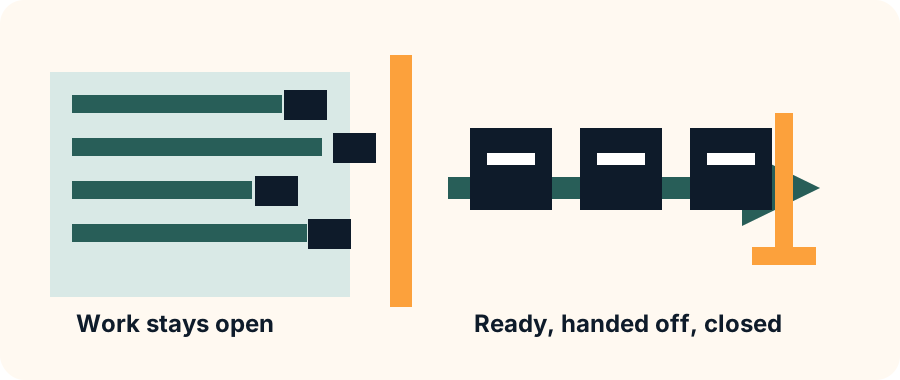
The deeper constraint was the operating boundary around delivery. Scope entered after the sale. Sales, delivery, support, and product used different definitions of ready, done, and accepted. Handoff material varied by project, emergency work concentrated around stabilization, and no single rule kept new work from loading a system that had not finished the work already inside it.
The delivery model was rebuilt from informal project-manager practice into a PMO and lifecycle model with architecture documentation, performance expectations, and capacity discipline. The operating rules were tightened around package scope, SOW boundaries, customer responsibilities, go-live readiness, project requests, stabilization, and the point where ownership transferred to support. The later implementation-guardrails work was approved and partially implemented; do not imply every proposed guardrail fully landed.
Stale signed-contract backlog fell from roughly $22M to roughly $8M while ARR grew from $3.4M to $13.8M in 2020. The value was not that projects looked more organized. Work the company had already sold reached the point where it could become revenue.