
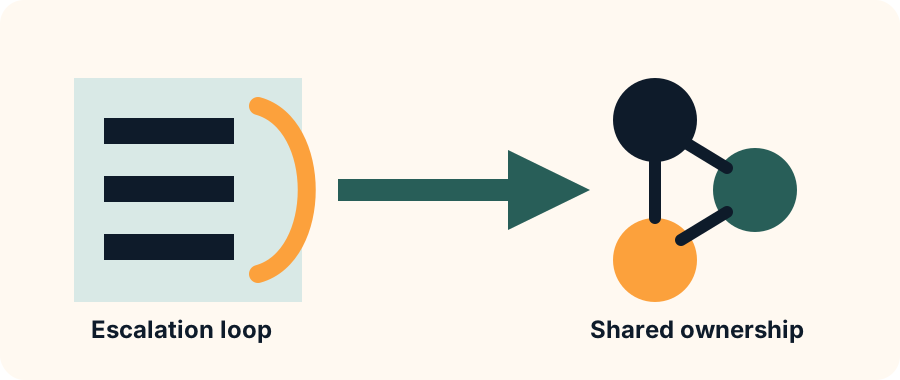
The organization was busy restoring service, answering tickets, attending project meetings, and escalating cross-team problems. The same incidents still returned. Broad incident resolution stayed slow. Service-desk response was weak. A routine need could travel up one management chain, across to a peer executive, and back down another before the people who could solve it worked together.
The visible answer was more coordination. The actual constraint was that coordination had no durable operating structure. Teams were organized around technologies and tools instead of named services and results. Queue ownership, WIP limits, incident follow-through, service ownership, and direct peer-level troubleshooting were inconsistent. Restoration happened, but restoration did not reliably become prevention.
The operating model was rebuilt around named services and owners, disciplined triage, queue ownership, WIP limits, weekly problem review, RCA follow-through, and direct peer troubleshooting. Approximately 60 services were cataloged with named owners, the service model was carried into ServiceNow and CMDB, and service-owner forums connected incident review to accountable follow-through.
The operating condition changed while the organization itself got smaller. A 65-person IT organization finished at 42 people producing better outcomes. Major incidents fell 60% year over year, broad incident MTTR including non-major incidents fell 79%, and service-desk answered rate moved from approximately 58% to 99.6% within six months.
The point is not that fewer people are always better. It is that performance should not be assumed to require more headcount before the operating constraint is understood.