
Production was running across hundreds of servers with abandoned patching, no active endpoint protection, unsupported firewalls, aging storage, and little usable operating documentation. Pending-reboot patches had accumulated until memory was exhausted and production was running on a shrinking share of the capacity already installed.
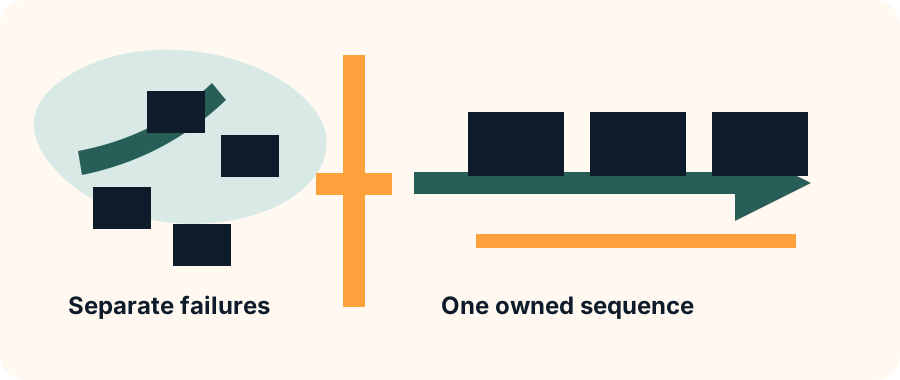
The visible failures looked like separate technical problems. The underlying issue was that the environment had no dependable operating baseline connecting inventory, maintenance, ownership, lifecycle, support, and budget. Fixing the latest server or incident did not change the condition producing the next one.
The useful evidence was concrete: incomplete inventory, missing maintenance schedules, expired or unsupported infrastructure, recurring manual recovery, and no reliable way to connect a technical problem to the service, owner, renewal, or replacement decision behind it.
The repair started with the operating foundation. The environment was inventoried and mapped, endpoint protection was installed, patching was rebuilt into a monthly automated cycle, firewall management was consolidated, and aging compute, storage, and network infrastructure was replaced against an explicit operating need rather than as isolated purchases. Documentation, maintenance rhythm, and support ownership were built with the technology so the environment did not fall back into the same state.
The result was not a cleaner diagram. A neglected technical estate became a supportable operating foundation that could sustain repeatable maintenance and compliance evidence rather than consume capacity through recurring cleanup.